Why Your Corporate Meeting Needs a Theme

The Power of a Well-Chosen Theme
Let's face it, corporate meetings can sometimes feel… well, like corporate meetings. But what if you could inject energy, focus, and a memorable experience into your next event? Well, you can with a well-defined and engaging theme.
Far from being just a decorative flourish, a strong theme acts as the backbone of your event. It provides a central idea that weaves through every aspect, from content delivery to attendee engagement, venues & locations, meals and team building. Think of it as the North Star guiding your meeting towards a successful outcome.
Why Bother with a Theme? The Impact is Real.
A thoughtfully chosen theme isn't just about graphics and branding; it has a tangible impact on several key areas:
- Content Alignment: A theme provides a framework for your speakers and presentations. It ensures that the information shared is relevant and contributes to a cohesive message. Instead of disparate talks, you create a unified narrative that resonates with your audience. For example, a theme like "Navigating the Future of Innovation" naturally steers content towards emerging technologies, strategic foresight, and creative problem-solving.
- Attendee Engagement: A compelling theme sparks curiosity and excitement. It gives attendees a mental hook, making the meeting more memorable and impactful. When people understand the overarching purpose and feel connected to a central idea, they are more likely to be actively involved in discussions, networking, and breakout sessions.
- Atmosphere and Culture: The theme influences the overall tone and atmosphere of the meeting. A theme like "Celebrating Success and Collaboration" can foster a positive and appreciative environment, while a theme like "Driving Transformation" can create a sense of urgency and shared purpose. This can significantly impact team morale and reinforce company culture.
- Branding and Messaging: A well-aligned theme can reinforce your company's brand and key messages. It provides an opportunity to communicate your values, vision, and strategic priorities in a creative and engaging way such as through the use of a custom created logo which incorporates your brand colors with he meeting theme.
Having a Hard Time Coming up With An Actionable Theme? No Worries, We’re Here to Help.
This is where the expertise of Impact Studios becomes invaluable. We understand that a theme isn't just a slogan; it's an experience waiting to be crafted. We work closely with your meeting team and presenters to understand your objectives, identify your target audience, and clarify your desired outcomes. We then leverage our creative and technical talents to seamlessly integrate the new theme across all aspects of the event. This can include:
- Visual Design: Creating engaging stage designs, presentation templates, and digital assets that visually represent the theme.
- Video Production: Developing dynamic opening and closing videos, speaker introductions, and thematic content that reinforces the core message.
- Interactive Elements: Incorporating polls, Q&A sessions, breakouts and other interactive tools that tie into the theme and encourage audience participation.
- Technical Execution: Ensuring flawless audio-visual delivery, creating a professional and immersive environment that enhances the overall theme.
- Virtual and Hybrid Solutions: Adapting the theme effectively for online and hybrid events, ensuring a consistent and engaging experience for all attendees, regardless of location.
Let Our Experts Help Your Team Create A Mood Board
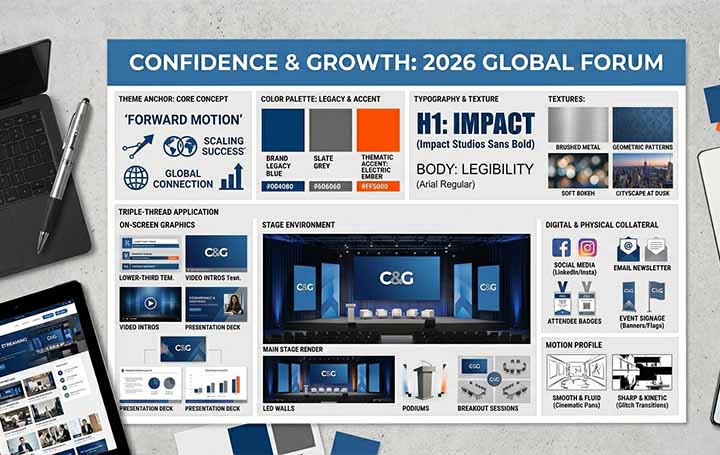
Implementing a mood board concept for a corporate event or high-end video production isn't just about picking colors; it’s about creating a visual languate that ensures the physical environment (the event space), the digital environment (the screens), and the brand identity are in total lockstep.
Here Is How Impact Studios Implements a "Theme-to-Screen" Mood Board For Our Clients:
1. The Anchor Point (The Core Concept)
Every project requires a primary visual anchor. If the theme is 'Unstoppable Momentum,' we move past literal imagery like a fast car and focus on visualizing energy. Perhaps by using diagonal leading lines and high-shutter speed motion effects to create a sense of forward momentum and speed
- Visual Cues: Diagonal lines, blurred backgrounds, and high-contrast lighting.
- Keywords: Velocity, Precision, Forward-Motion.
2. The Color Palette (Primary & Secondary)
We integrate 2 palettes; brand colors and theme colors.
- Brand Legacy: Your corporate blues or greens that provide the foundation.
- Thematic Accent: For "Momentum," we might add an "Electric Ember" orange. This color is used sparingly for call-to-action buttons on screen or the "rim light" on a speaker's podium.
3. Typography & Texture
- Typography: We select two sets of fonts. One for thematic impact and the other for readability in your presentation decks.
- Texture & Depth: We define the physical and digital "feel" of the event through deliberate texture mapping. For a "Human Connection" theme, we utilize organic elements like linen, soft bokeh, and warm wood grains to create intimacy. For technical or innovation-led events, we implement metallic gradients and digital patterns to reinforce a modern, high-tech aesthetic across all screens and surfaces.
4. Unified Brand Integration
This stage bridges the gap between vision and reality, as we map the theme onto three distinct production layers
- On-Screen Graphics: Lower-thirds, intro videos, and deck templates must use the exact hex codes and font weights from the board.
- Stage Environment: coordinate with the lighting team to ensure the LED wall content and the stage up-lighting complement the board's palette.
- The Collateral: Any printed programs or promotional items should feel like they were birthed from the same digital file.
5. The "Motion Profile"
In a video-first world, a mood board must also define how things move.
- Smooth & Fluid: Dissolves and slow pans (best for "Beyond the Zoom" cinematic looks).
- Sharp & Kinetic: Quick cuts and glitch transitions (best for high-energy product launches).