What Keeps You Up at Night:
Impact's AI-Powered Insurance Commercial
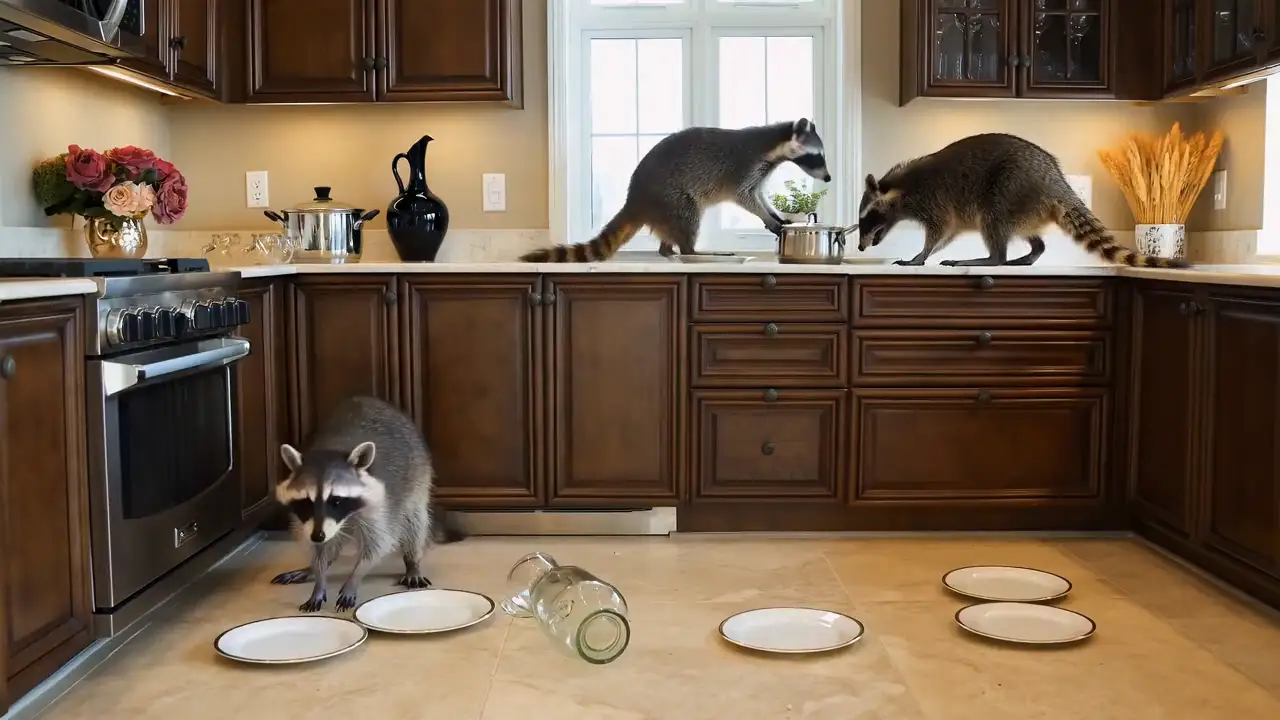
One of the dream sequences from our latest AI-powered commercial — full spot below
Every homeowner has that 3 a.m. thought: what if something goes wrong? A tree falls. Water floods the kitchen. Wildlife stages a full-scale invasion. For most of us, these scenarios stay safely in the realm of worry. For Impact Studios, they became the centerpiece of a one-minute digital commercial titled What Keeps You Up at Night.
The Concept
It was pure dream-sequence absurdity. A woman repeatedly jolts awake from increasingly over-the-top home disasters: raccoons ransacking the kitchen, a confused rower washing up on the front lawn after a hurricane, a tree limb — complete with startled squirrels — crashing onto a car and a major home flood. The spots needed to feel big, funny, and slightly unhinged. They also needed to be produced on a realistic budget.
That last part was the problem.
The Challenge
Live-action versions of these sequences would have required specialized animal handlers, a huge set built in a water tank, structural damage to a home, and a level of controlled chaos that quickly becomes expensive — and genuinely risky. Director John Carboni put it plainly:
"Our client needed to make some big points, but practical execution would have taken an even bigger budget than we had. AI was the perfect tool to help us create the nightmare dream sequences."
Rather than downsize the script into something that would diminish our client's message, Impact Studios chose a hybrid approach — one that leaned into the commercial's dream vibe instead of fighting it.
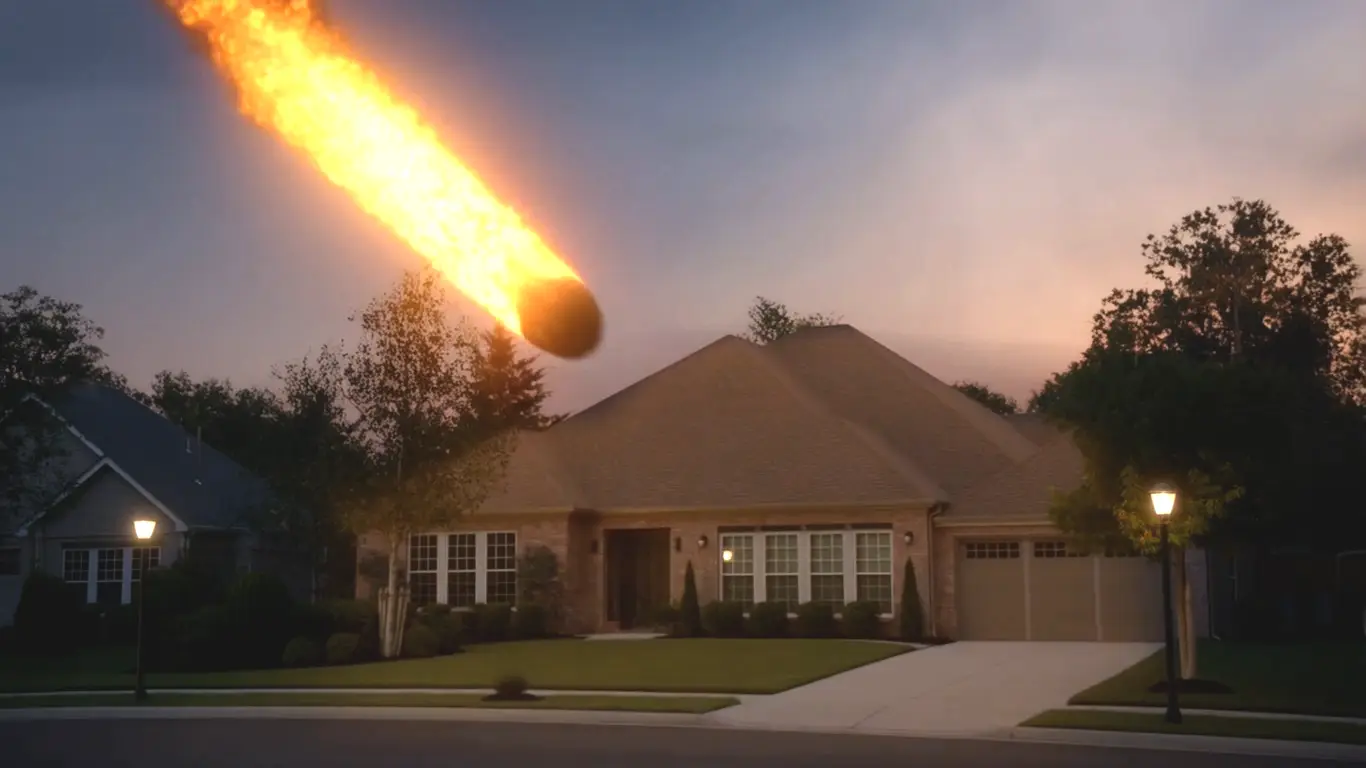
The Solution: Live Action + AI, Intercut for Maximum Effect
The production was shot on location in a bucolic home overlooking the bay on NY's Long Island with a live-action actress experiencing the recurring nightmares. The grounded, human moments were then intercut with outlandish AI-generated sequences, built using a mix of platforms including Adobe Firefly, Grok, Envato and After Effects, among others. The result was a seamless, yet intentionally heightened dream world.
Importantly, the team never tried to hide the artificial nature of the disaster shots — they leaned into it. Because the commercial is structured as a series of nightmares, the uncanny quality of the AI imagery reinforced the surreal tone rather than undercutting it. Viewers weren't meant to believe a real raccoon army had taken over a kitchen, or that a rowboat had somehow beached itself on a suburban lawn. They were meant to feel the escalating absurdity of the character's fears — exactly the emotional territory an insurance message wants to occupy.
Speaking Directly to the Audience That Needed to Hear It
The campaign was produced in both English and Spanish versions — but this wasn't a routine localization pass. The commercial was built specifically for Hispanic homeowners, an audience that, by and large, is under-served by insurance messaging and often underestimates how much protection matters until disaster is already at the door.
To close that gap, Impact Studios didn't just translate the script — the English-language version was narrated with a distinct Hispanic-accented voiceover, deliberately aimed at English-speaking Latino homeowners and the English-speaking children of Spanish-speaking households. The accent was a strategic choice, not a stylistic one: it signaled that the insurance company speaking to them was part of their community, not an outside brand talking down to it. The narrator was an authentic human, the voiceover was no time to use AI to cut corners.
Why It Worked
Three things made the approach successful:
- Honesty about the tool. By not attempting stylistic deception, the AI footage stayed true to the dream-sequence premise and avoided the visual trap that will undermine viewer trust.
- Creative amplification of the concept. Shots that would have been prohibitively expensive or dangerous in live action became opportunities for visual humor and scale that traditional methods couldn't match at the same budget.
- Integration, not replacement. The live-action performance of the actress provided an emotional anchor. The AI sequences supplied the impossible visuals. Together, they created a cohesive, memorable piece of advertising — one built to reach the audience it was made for, in a voice that audience would trust.
The Bigger Picture for Production
What Keeps You Up at Night is a practical case study in how modern production companies can expand creative ambition without automatically expanding the budget line. AI didn't replace the need for strong direction, cinematography, or storytelling — it removed specific barriers that would have otherwise limited the idea.
For Impact Studios, the project reinforced a simple principle: the best use of new tools is the one that serves the story and the audience — not the other way around. When the story is a series of escalating homeowner nightmares, controlled absurdity goes a long way.