The Technology Behind Every Stream We Produce
With over 30 years of production experience, we make complex streaming simple, stable, and engaging.
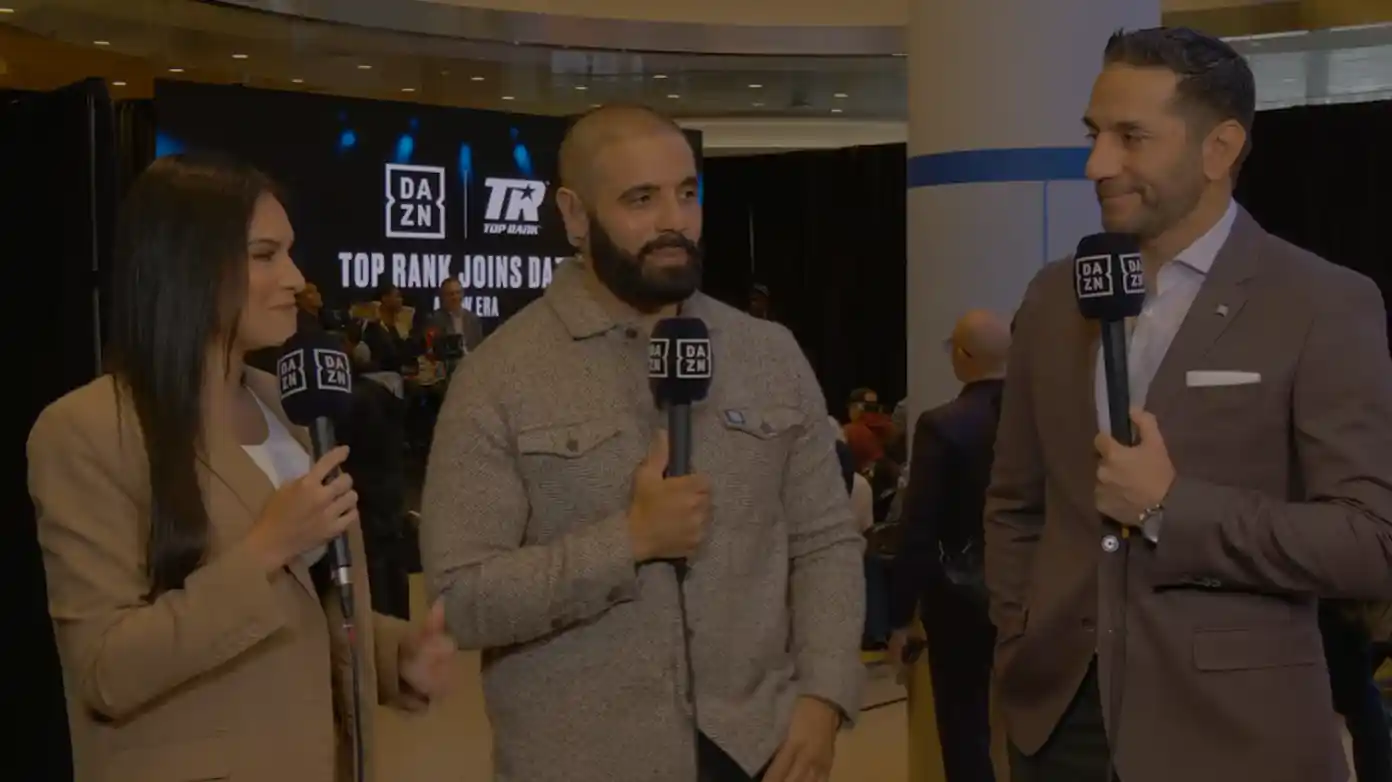
Before there was streaming, there was live broadcast television and satellite uplinks. We've been engineering live signal chains under pressure for decades. What follows is exactly how we do it — the equipment, the protocols, the redundancy, and the failover logic. If something in here doesn't meet your requirements, call us. We'll talk through it. If you have questions about how we integrate with your environment, we're easy to reach.
Bonded Cellular Uplinks – Go Live From Any Location
Our primary connectivity layer uses bonded cellular aggregation across multiple simultaneous carrier connections — typically Verizon, AT&T, T-Mobile, and where available a fourth carrier along with venue wired internet or Wi-Fi — combined into a single high-bandwidth uplink channel. We deploy TVU, Haivision and LiveU hardware encoders .
The aggregation engine performs real-time packet-level load balancing and forward error correction across all active connections. If a single carrier path degrades or drops, traffic is redistributed across remaining paths with no perceptible interruption to the stream. Failover is automatic and sub-second.
Transmission is AES-256 encrypted end-to-end. For high-security events, we can configure token-authenticated delivery to restricted CDN endpoints or private ingest servers.
In parallel, we run a secondary encoder / uplink path over the venue's wired and or Wi-Fi network where available, treated as a hot standby rather than a primary path. The bonded cellular layer is always primary.


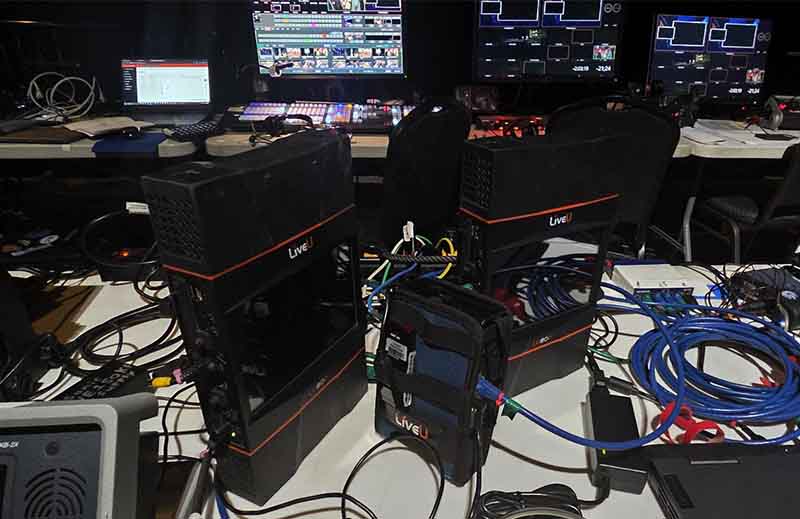
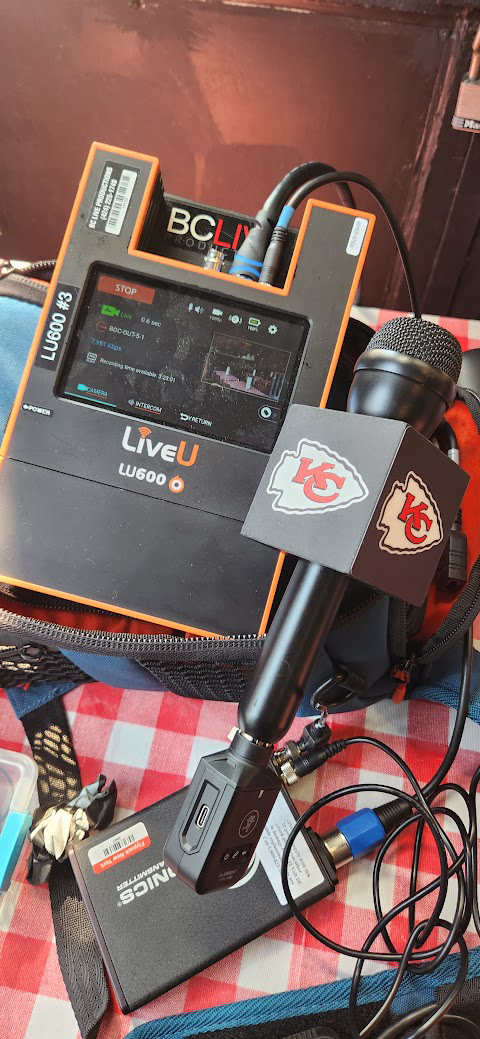
How Bonded Cellular Works
Bonded cellular aggregates multiple independent 4G/5G carrier connections — Verizon, AT&T, T-Mobile and others — into a single logical uplink channel using packet-level interleaving and forward error correction. The encoder distributes the outbound stream across all active paths simultaneously, with each path carrying a portion of the overall bitrate. Where available, venue wired ethernet or Wi-Fi is added to the bond as an additional path, increasing total uplink capacity and providing an additional layer of redundancy.
At the receiving end, a cloud media gateway — Haivision SRT Gateway, Zixi Broadcaster, or TVU Transceiver — reassembles the packets in sequence and reconstitutes a clean, single output stream. If a carrier path drops, forward error correction fills the gap. From there, the gateway distributes the signal to one or more delivery endpoints — YouTube Live, LinkedIn, Vimeo, private CDN, Zoom, Microsoft Teams, or any platform accepting an RTMP, RTMPS, or SRT push — simultaneously if required. The bonded cellular layer and the cloud gateway together are what make platform-agnostic, multi-destination live distribution possible from any location with cellular coverage.
Latency is what makes this possible. Rather than delivering packets to the viewer the instant they arrive, the gateway holds an adjustable buffer — typically two to ten seconds depending on the event's tolerance — giving the system time to receive, reorder, and reconstruct any packets that arrived late or out of sequence across the bonded paths. Dropped packets are retransmitted before the buffer window closes, so what looks like a path failure at the transport layer is invisible at the output. The tradeoff is a small, deliberate delay between the live event and the viewer — the price of a reliable, artifact-free stream.
This architecture replaces the traditional single-point dependency on a venue's wired internet connection or a dedicated satellite uplink. It operates over standard cellular infrastructure, requires no advance venue coordination, and scales bitrate by adding carrier connections rather than provisioning dedicated circuits.
For broadcast engineers: think of it as compressed IP contribution over cellular transport — the same role as a fiber or satellite uplink, but with built-in path diversity and forward error correction across multiple carriers.
We support the full broadcast protocol stack and select based on event architecture and delivery requirements:
- SRT (Secure Reliable Transport) — primary contribution and distribution protocol for point-to-point delivery requiring low latency and packet loss recovery. Used for encoder-to-server and server-to-CDN hops where network conditions are variable.
- RTMP / RTMPS — contribution to platforms requiring legacy ingest (YouTube Live, Facebook Live, Twitch, most CDN ingest endpoints). We support RTMPS for encrypted contribution where required.
- HLS / DASH — adaptive bitrate output for web and mobile playback. Standard for viewer-facing delivery via CDN.
- NDI (Network Device Interface) — used for local LAN-based video routing between production devices. Supports high-quality uncompressed or lightly compressed signals over standard Ethernet without dedicated video infrastructure.
- WebRTC — deployed for interactive or sub-second latency applications, including live Q&A feeds and bidirectional talent communication.
- RIST — used for reliable contribution over public internet where SRT is not supported by the receiving endpoint.
- Zixi — enterprise contribution with managed error correction and bonded path support, used for broadcaster and affiliate distribution workflows.
We can simultaneously output to multiple ingest endpoints across different protocols. Simultaneous multiplatform distribution to YouTube, Facebook, LinkedIn, Vimeo, Zoom, Microsoft Teams, and private RTMP endpoints is standard.
Connection Test and Data Tools
Is My Internet Connection Fast Enough?
Bandwidth readiness check
Find out if your internet connection can handle your event.
How Much Data Will My Live Stream Use
How Much Data Will My Live Stream Use
Live stream data usage calculator
Conservative estimates that account for other network activity during your event.